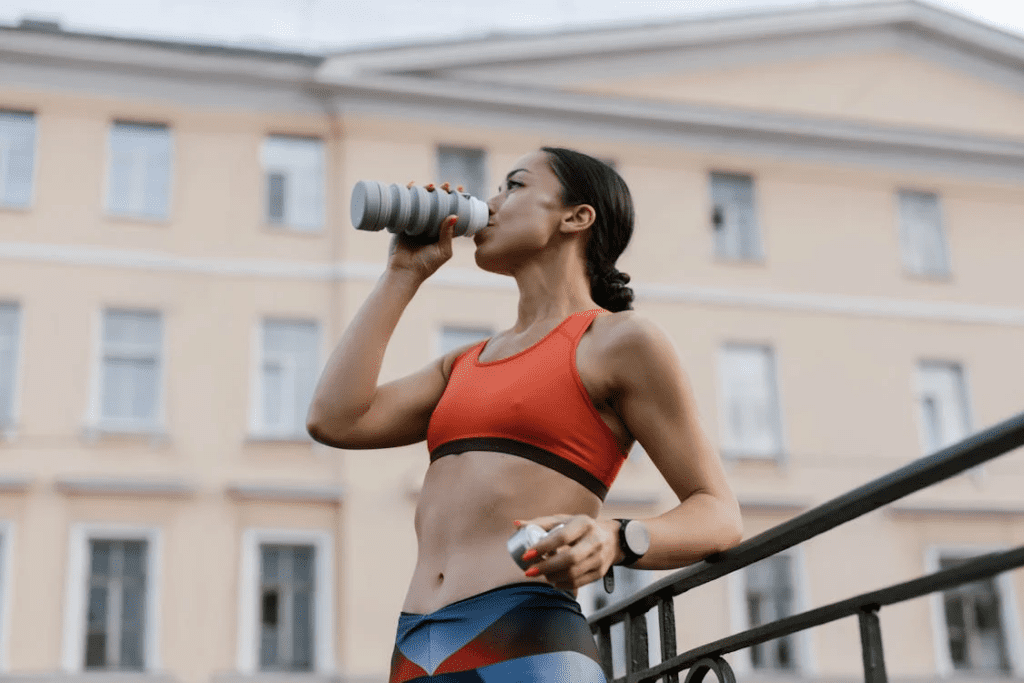
Strong, Not Stressed: How Women Can Build Muscle, Recover Better, and Support Long-Term Health
For years, women were told to “tone,” avoid heavy weights, and eat as little as possible. Thankfully, that narrative is changing.
More women are recognizing that strength is foundational to health, confidence, and longevity—not something to fear or chase temporarily.
But building strength isn’t just about lifting weights. It’s about supporting the body as a system: training, recovery, nutrition, stress management, and—when appropriate—targeted supplementation.

Why Strength Training Matters for Women at Every Stage of Life
Resistance training is one of the most powerful tools women have for long-term health.
Consistent strength training has been shown to:
- Preserve lean muscle mass
- Support metabolic health
- Improve bone density
- Reduce injury risk
- Enhance confidence and body autonomy
Importantly, women do not “bulk” easily. Hormonal differences mean muscle development is gradual, functional, and protective.
Strength training isn’t about aesthetics—it’s about capacity.
Muscle Growth Is a Recovery Process (Not Just a Workout)
Muscle adaptation occurs after training—during recovery.
Key recovery pillars include:
- Adequate sleep
- Sufficient protein intake
- Stress regulation
- Strategic training volume
Without recovery, even the best program will stall progress or lead to burnout.
Signs recovery may be insufficient:
- Persistent soreness
- Plateaued strength
- Poor sleep
- Low motivation
- Increased injury risk
Recovery is not a weakness—it’s a performance strategy.
Protein: A Cornerstone for Strength and Recovery
Protein intake plays a central role in muscle repair, hormone signaling, and satiety.
Women—especially active women—often under-consume protein due to outdated dietary advice.
General evidence-based guidance:
- Aim for protein at every meal
- Spread intake evenly across the day
- Prioritize quality and digestibility
Protein needs increase with:
- Strength training
- Aging
- Caloric deficits
- High stress levels
Training Smarter Across the Menstrual Cycle (and Beyond)
Women’s physiology is dynamic. Energy levels, recovery capacity, and stress tolerance can fluctuate across the menstrual cycle.
Rather than fighting these changes, smart training works with them.
- Heavier strength work often feels better during higher-estrogen phases
- Recovery and mobility-focused training may be more effective during lower-energy phases
This isn’t about limitation—it’s about precision.
Supplements as Support—Not Substitutes
Supplements should never replace nutrition, sleep, or training fundamentals. But when used appropriately, they can support recovery, performance, and overall resilience.
A strength-focused lifestyle may benefit from:
- Protein supplementation to meet daily needs
- Creatine for strength, recovery, and cognitive benefits
- Micronutrients that support bone health, iron status, and energy metabolism
The goal is supporting consistency, not chasing shortcuts.
Protein Calculator (Women • Fitness)
Evidence-based ranges. Choose your goal and activity, then see a daily range + per-meal targets. Body weight Units lb kg Goal Maintain / General Fitness Build Muscle / Strength Fat Loss (Calorie Deficit) Very active (hard training 5–6 days/week, high steps) Meals per day 3 4 5 Calculate Protein
Enter your info and click “Calculate Protein.”
Medical disclaimer: Educational only; not medical advice. If pregnant, breastfeeding, or managing kidney disease or other medical conditions, consult your clinician for individualized targets.
Strength for Longevity, Not Just Today
Strong women are resilient women.
Building muscle today supports:
- Injury prevention tomorrow
- Independence later in life
- Confidence in daily movement
- Long-term metabolic health
The strongest approach isn’t extreme—it’s sustainable.
Final Takeaway
Strength training for women is not about shrinking, burning out, or constantly pushing harder.
It’s about:
- Training with intention
- Recovering with respect
- Nourishing the body consistently
- Supporting the process intelligently
When strength is built as part of a broader lifestyle, the results last far longer than any quick fix ever could.
Resources:
Thomas DT, Erdman KA, Burke LM.
Position of the Academy of Nutrition and Dietetics, Dietitians of Canada, and the American College of Sports Medicine: Nutrition and athletic performance.
J Acad Nutr Diet. 2016;116(3):501–528.
Phillips SM, Winett RA.
Uncomplicated resistance training and health-related outcomes: Evidence for a public health mandate.
Curr Sports Med Rep. 2010;9(4):208–213.
Kreider RB, Kalman DS, Antonio J, et al.
International Society of Sports Nutrition position stand: Safety and efficacy of creatine supplementation.
J Int Soc Sports Nutr. 2017;14:18.
Devries MC, Phillips SM.
Creatine supplementation during resistance training in older adults—A meta-analysis.
Med Sci Sports Exerc. 2014;46(6):1194–1203.
Mangano KM, Walsh SJ, Insogna KL, et al.
Dietary protein intake and bone mineral density in older adults.
Am J Clin Nutr. 2017;105(3):714–722.
Beard JL, Tobin BW.
Iron status and exercise.
Am J Clin Nutr. 2000;72(2 Suppl):594S–597S.
Holick MF.
Vitamin D deficiency.
N Engl J Med. 2007;357(3):266–281.
McGlory C, Gorissen SHM, Kamal M, et al.
Protein intake and resistance training in women.
Nutrients. 2019;11(2):318.
Lewis RM, Redzic M, Thomas DT.
The effects of omega-3 fatty acids on muscle recovery and performance.
Nutrients. 2020;12(2):505.